Peptide Reconstitution Research Protocol Guide
· Peptastic Labs
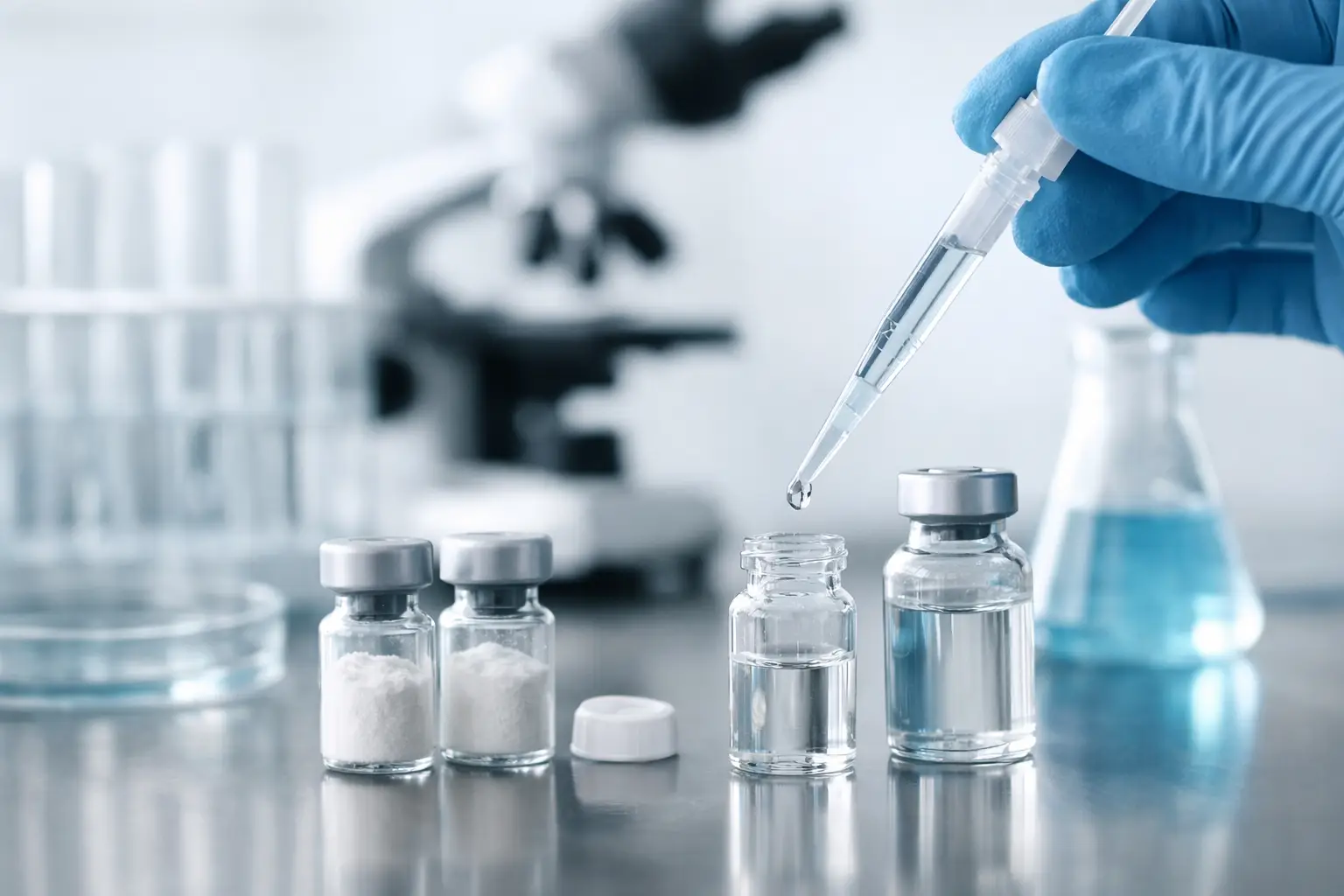
A peptide reconstitution research protocol is not simply a matter of adding liquid to a vial. It is the point at which a documented lyophilised material becomes a working research solution, with concentration, solvent compatibility, sterility controls and storage conditions all affecting the usefulness of downstream data. A well-handled vial can support repeatable work across an assay series. A poorly documented preparation can introduce uncertainty before the experiment begins.
For research-grade materials, the goal is traceability from the supplied lot through to the final aliquot. That means retaining the lot number, batch-specific Certificate of Analysis, reconstitution record and storage history alongside experimental observations. Materials are supplied for research use only and must be handled within appropriately authorised laboratory settings and procedures.
Why reconstitution deserves a written protocol
Lyophilisation improves the transport and longer-term storage profile of many peptides, but it does not eliminate the chemical and physical considerations that apply once a peptide is in solution. Some sequences dissolve readily in purified water, while others may show limited solubility, adsorption to surfaces, pH sensitivity or aggregation. A solvent suitable for one material may be inappropriate for another assay or may interfere with the planned analytical method.
The main value of a written protocol is consistency. When a project involves multiple researchers, time points or peptide lots, a standard method reduces avoidable variation. It also makes it easier to investigate unexpected findings. If a signal changes, the research team can check the preparation record rather than relying on memory.
A Certificate of Analysis can verify the identity and analytical quality of the supplied material within its stated scope, such as purity testing and mass confirmation. It does not automatically determine the best solvent, final concentration or in-use stability for every experimental system. Those decisions should be guided by the peptide's technical documentation, published method considerations, the assay design and laboratory validation.
Peptide reconstitution research protocol: pre-checks
Before opening a vial, confirm that the material received matches the study plan. Record the peptide name, lot number, stated net content, receipt date and relevant Certificate of Analysis reference. If the supplier provides QR-code or lot-matched documentation, retain a copy in the project record so the analytical evidence remains connected to the material used.
Review the sequence-specific handling guidance available to the laboratory. Pay attention to known solvent restrictions, expected solubility, molecular weight, sensitivity to oxidation or light, and whether the peptide contains residues that can complicate storage in solution. Peptides with different sequence chemistry can behave very differently even when they appear similar by name or intended research area.
The proposed final concentration should be calculated before reconstitution. Starting with a defined stock concentration simplifies serial dilutions and makes it easier to account for the amount of peptide added to each experimental condition. It also helps avoid repeated thawing and dilution of a primary stock simply because the original preparation was not fit for the planned workflow.
Check that the selected diluent is compatible with both the peptide and the intended assay. High-purity laboratory water may be suitable in some workflows, while buffered systems or carefully controlled co-solvent approaches may be required in others. The correct choice depends on the material and method. A diluent that maintains peptide solubility may still be unsuitable if it alters cell viability, enzyme activity, chromatographic separation or another assay endpoint.
Preparing the workspace and materials
Reconstitution should be performed using clean, suitable laboratory equipment and a workflow designed to minimise mix-ups. Prepare labelled low-binding tubes or other appropriate containers in advance, and ensure labels include the peptide identifier, lot number, stock concentration, solvent, preparation date, preparer initials and storage condition.
Where sterile conditions are required by the research method, use validated aseptic procedures and fit-for-purpose sterile consumables. Sterility should not be assumed merely because a material is supplied as a dry research product. The receiving laboratory remains responsible for its own handling controls, particularly for cell-based systems or other contamination-sensitive studies.
Use calibrated pipettes and confirm the planned reconstitution volume independently before dispensing. Very small volumes can create disproportionate error, especially when the vial contains a low mass of material or the assay requires narrow concentration ranges. If the calculated volume is impractically small, it may be more reliable to prepare an intermediate stock consistent with the method rather than force a low-volume addition.
Reconstitution steps for controlled preparation
Allow a refrigerated or frozen vial to equilibrate to the laboratory's controlled handling conditions before opening where the product instructions support this approach. This reduces the likelihood of condensation entering the vial. Inspect the vial and label before use, confirming there is no sign of damage, unexpected moisture or identification discrepancy.
Add the pre-calculated volume of selected diluent slowly against the inner wall of the vial where practical. This approach is commonly used to avoid aggressively disturbing the lyophilised cake and to reduce unnecessary foaming. Do not assume that vigorous shaking improves dissolution. For many peptides, gentle swirling, controlled inversion or a brief low-stress mixing approach is more appropriate, subject to the material-specific method.
Allow sufficient time for dissolution before making a judgement about solubility. The required time varies according to peptide chemistry, concentration, solvent and temperature. A clear-looking solution is not, by itself, proof that the preparation is chemically intact or at the intended concentration, but visible particulate matter, haze or persistent residue should trigger a documented assessment before the solution is introduced into a study.
Record the actual volume used, not only the planned volume. Then calculate and record the nominal stock concentration using the supplied mass and final reconstitution volume. Where the experiment requires high confidence in solution concentration, identity or stability, verify the preparation with a method appropriate to the laboratory, such as validated chromatographic or mass-spectrometric analysis. Visual inspection cannot replace analytical verification.
Aliquoting and storage decisions
Once reconstituted, divide the stock into aliquots sized for realistic experimental use. Aliquoting is usually preferable to repeated freeze-thaw exposure of a single master vial, but the best aliquot volume depends on the expected number of runs, the required working concentration and the laboratory's stability data.
Use containers selected to reduce sample loss and cross-contamination risk. At low concentrations, some peptides can adsorb to container surfaces, so tube selection may affect the amount available in solution. This is particularly relevant when comparing results across different laboratories or when working close to an assay's lower response range.
Storage temperature, light protection and permitted hold time should follow the product documentation where supplied and be confirmed through internal method development when the intended study requires it. Stability is not a fixed property attached to a peptide name. It changes with solvent composition, concentration, container type, freeze-thaw history and the specific conditions under which the solution is held.
A practical record should capture each aliquot's identifier, location, storage temperature, number of freeze-thaw events and date of disposal. If an aliquot is used after an extended storage interval, note that decision in the experimental record rather than treating it as equivalent to a freshly prepared solution.
Common failures that compromise research value
The most frequent issue is not always complete insolubility. More often, it is undocumented variation. One researcher may prepare a concentrated stock in a different solvent, another may use an older aliquot, and a third may calculate concentration from a nominal rather than recorded volume. The resulting data can look inconsistent even if the peptide itself was supplied with verified purity.
Another avoidable problem is treating all peptide preparations as interchangeable. Sequence, formulation, assay matrix and intended endpoint all matter. A stock preparation for receptor-binding work may need different controls from one prepared for cell culture, analytical reference comparison or signalling-pathway experiments.
Researchers should also avoid extending claims beyond what the method can support. A peptide's documented identity and purity are essential procurement criteria, but they do not establish biological performance in every model. Proper controls, suitable replicates and transparent reporting remain necessary for interpretable preclinical research.
Documentation is part of the experiment
A useful preparation sheet links procurement quality to laboratory execution. Include the product and lot identifiers, Certificate of Analysis reference, reconstitution calculations, solvent identity, observed appearance, aliquot map, storage conditions and any deviations from the planned method. This record becomes especially valuable when a study is repeated months later or when results are compared across batches.
For laboratories sourcing materials online, lot matching and third-party purity documentation provide a stronger starting point than unsupported product descriptions. Peptastic Labs positions research-grade materials with batch-specific documentation so researchers can assess what was purchased and maintain a clearer chain of evidence in their own workflows.
The most useful protocol is the one your laboratory can repeat without guesswork. Treat each reconstituted vial as a documented research preparation, not a disposable intermediate, and the quality of the record will remain available long after the final assay plate has been read.
For research use only. Not for human or veterinary use. Not for consumption. Nothing in this article is medical advice or a recommendation for use in humans or animals.