Are Research Peptides Sterile? What COAs Can Prove
· Peptastic Labs
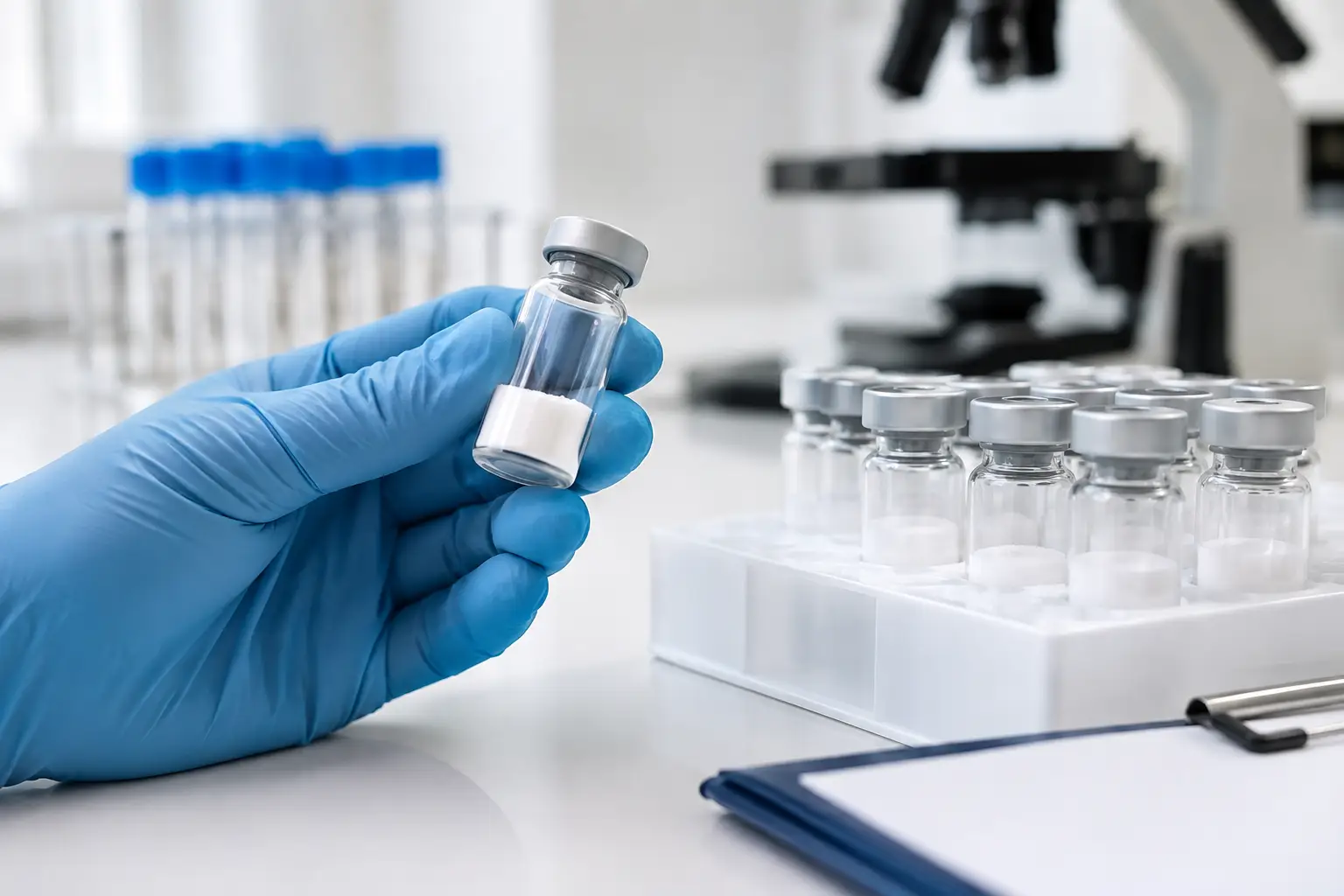
A peptide can show high analytical purity and still not be sterile. That distinction is central to the question, are research peptides sterile, because purity data, identity confirmation and microbial control are separate quality attributes. For laboratories sourcing research materials online, the correct answer is rarely a blanket yes or no. It depends on the manufacturer’s validated process, the claim attached to the specific lot, and the documentation supplied with it.
Research-use-only materials are not medicines, and they should not be represented as suitable for human or veterinary administration. A laboratory should assess each material according to its intended research workflow and apply its own approved handling, containment and analytical procedures.
Are research peptides sterile by default?
No. Research peptides should not be assumed sterile simply because they arrive as a white lyophilised powder in a sealed vial, carry a high-purity result, or are described as research-grade. Those features may support identity, composition and packaging integrity, but none independently demonstrates that a lot is free from viable microorganisms.
Sterility is a defined microbiological claim. To make it credibly, a supplier needs an appropriate manufacturing approach, controlled packaging, and validated sterility testing or equivalent evidence relevant to the finished material. The claim must apply to the specific product and batch, not merely to a general facility standard or a statement about starting materials.
Many research peptides are supplied for in vitro, analytical or preclinical work where researchers may need to perform their own preparation and controls. In these settings, the relevant question is often not just whether the unopened vial was tested for sterility. It is whether the material’s quality documentation matches the experimental design, and whether the laboratory can preserve sample integrity after receipt.
Purity is not the same as sterility
A Certificate of Analysis can contain valuable data, but its meaning depends on the tests listed. High-performance liquid chromatography may report peptide purity. Mass spectrometry can help verify molecular identity. Water content, residual solvents, peptide content and appearance testing may also be relevant. These results speak to chemical and analytical quality.
They do not automatically answer a microbiological question. A 99% purity result, for example, describes the proportion of the measured material attributable to the target compound under a stated analytical method. It does not establish the absence of bacteria, fungi or other viable contaminants.
This is where procurement decisions can go wrong. A purchaser sees an impressive purity percentage and treats it as a universal quality guarantee. It is better viewed as one element of a broader evidence set. Identity, purity, microbial status, endotoxin status, storage conditions, vial closure and lot traceability each address different risks.
For sensitive cell-based or biological research, the difference matters. A material can be chemically appropriate while still requiring microbiological assessment that is proportionate to the work being performed. Conversely, a sterile claim without clear lot identification or test context offers limited confidence.
What documentation supports a sterility claim?
The strongest starting point is lot-matched documentation. The lot number on the vial or label should correspond directly to the Certificate of Analysis and any supporting test report. A QR code or batch reference can be useful, provided it leads to the correct document rather than a generic example certificate.
Where sterility is claimed, researchers should look for language that identifies the finished lot and states the method, result and specification. Documentation may refer to a recognised sterility test, microbial limits testing, bioburden testing or other microbiological controls. These terms are related but not interchangeable.
Sterility testing is designed to support a claim that viable microorganisms are absent under the conditions of the test. Microbial limits testing generally assesses whether microbial counts fall within specified limits. Bioburden testing measures or estimates the viable microbial load before a subsequent process. Endotoxin testing measures a different risk again: bacterial endotoxin can remain even where viable bacteria are not detected.
A supplier should not blur these categories. “Tested for purity” does not mean sterile. “Sterile-filtered” describes a processing step, not necessarily a validated finished-product sterility claim. “Low endotoxin” does not mean sterile, and a microbial limits result is not automatically equivalent to sterility testing.
Packaging and handling still affect sample integrity
Even a well-documented lot can be compromised by poor storage or handling after release. For lyophilised peptides, moisture exposure, repeated temperature cycling, damaged vial closures and unclear chain-of-custody practices can all affect material quality. These concerns are not proof of contamination, but they are legitimate reasons to review a sample before use in sensitive work.
Researchers should inspect incoming materials against the order and lot documentation, record condition on arrival, and store them according to the supplier’s stated guidance. Once a vial is opened or material is prepared within a laboratory, the original supplier’s claim can no longer cover every subsequent handling step. Internal controls become the laboratory’s responsibility.
This is particularly relevant for shared laboratory environments. A documented starting material supports traceability, but experimental reproducibility depends on the complete chain: verified lot, controlled receipt, suitable storage, accurate records and procedures appropriate to the assay.
Questions to ask before purchasing
For research teams that need particular microbiological characteristics, the purchase decision should begin with the experimental requirement rather than a marketing label. Ask whether sterility is actually required for the work, what claim is needed, and what evidence will satisfy internal quality expectations.
Then confirm whether the supplier provides batch-specific Certificates of Analysis, whether identity and purity data are clearly reported, and whether microbiological testing is listed separately when relevant. It is also worth checking that the vial label, outer packaging and documentation share the same lot number. If a claim cannot be tied to the lot being purchased, treat it as unverified.
Price can be a practical consideration, especially for ongoing research programmes, but lower cost should not require a trade-off in traceability. A competitively priced research peptide with transparent, lot-matched documentation is more useful than an undefined material supported only by broad quality language.
A documentation-first standard for research materials
Peptastic Labs positions its materials for research use only and supports purchasing decisions with batch-specific documentation, including Certificates of Analysis and verified purity data where applicable. That documentation helps researchers assess what has been tested, rather than asking them to infer quality from a product name or purity percentage alone.
The right standard is not to assume that every research peptide is sterile. It is to require precise claims, match them to the relevant lot, and recognise the limits of each test. When the work calls for microbiological assurance, clear evidence is more valuable than a reassuring label.
For research use only. Not for human or veterinary use. Not for consumption. Nothing in this article is medical advice or a recommendation for use in humans or animals.